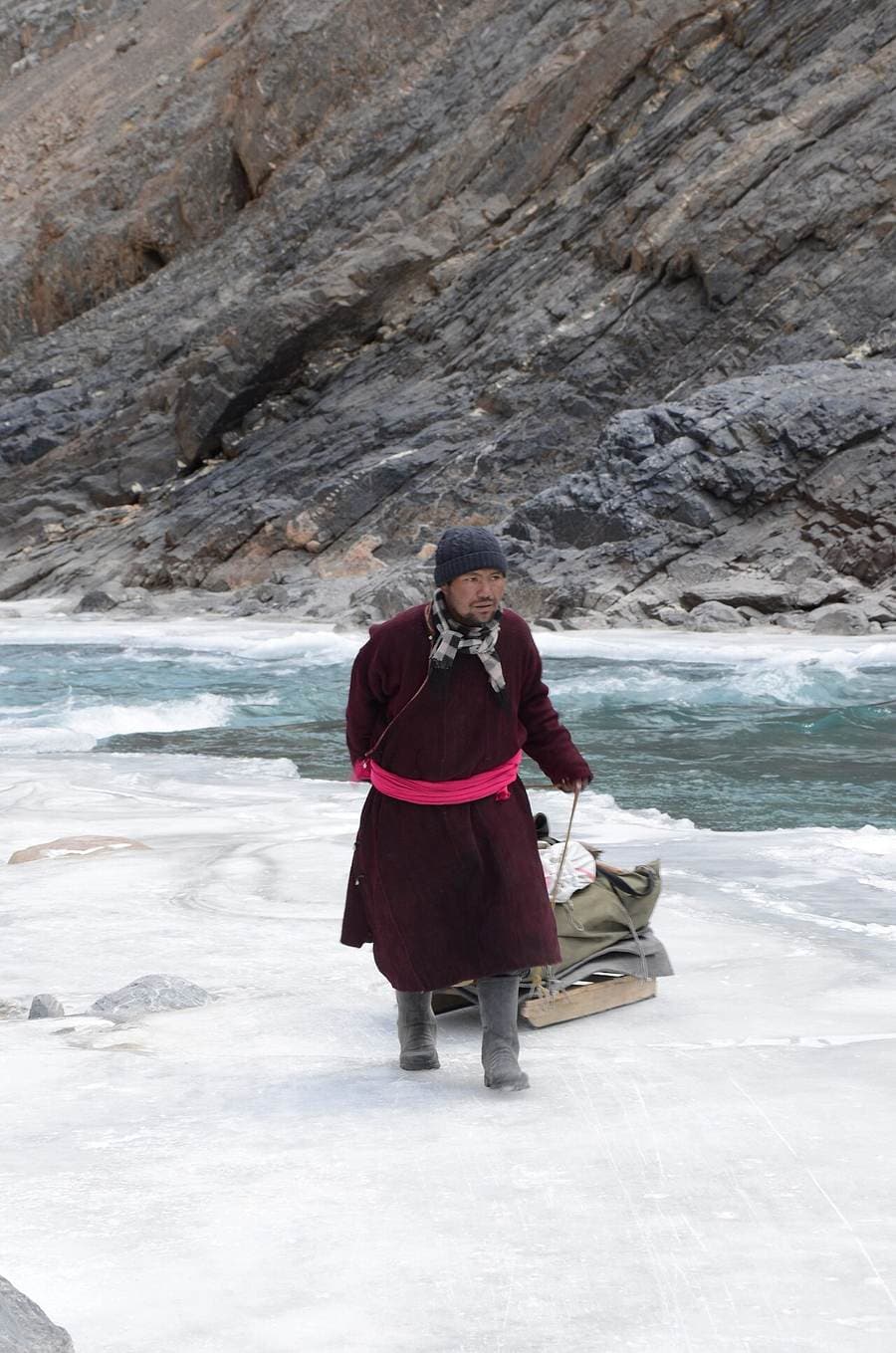
Chadar isn't a trek in the usual sense — there's no trail. The route is the river itself, frozen into a sheet that shifts every season depending on temperature and flow. What was solid ice last year might be open water this year, which is why the route is scouted by local guides days ahead, not fixed on a map.
The acclimatization day in Leh before any trekking starts is non-negotiable, and we mean that literally — landing at 3,500m and starting to walk the next day is how people get sent home early. A full rest day at altitude first, no exceptions.
Nights are spent in caves used by trekkers and traders for decades, not tents — the rock holds a little more warmth than canvas, though "warmer" at -20°C is a relative term. You sleep in every layer you own.
The ice itself has a sound. Cracks and groans travel along the sheet as it shifts, which is unsettling the first night and background noise by the third. Guides read the ice constantly — colour, thickness, the sound it makes underfoot — and reroute around sections that don't look right rather than testing them.
Our standard batch turns around at Naerak, past the frozen waterfall, rather than pushing to Lingshed. It's a deliberate choice: the extra distance adds real risk for a marginal gain in scenery, and turning back with the group still strong beats pushing to a harder finish line.
What surprises people most isn't the cold — everyone arrives braced for that. It's the silence. No wind funnel like a mountain pass, no river sound because the river is silent under the ice. Just footsteps and, occasionally, the ice itself.